
PPN (Peripheral Parenteral Nutrition) in San Diego
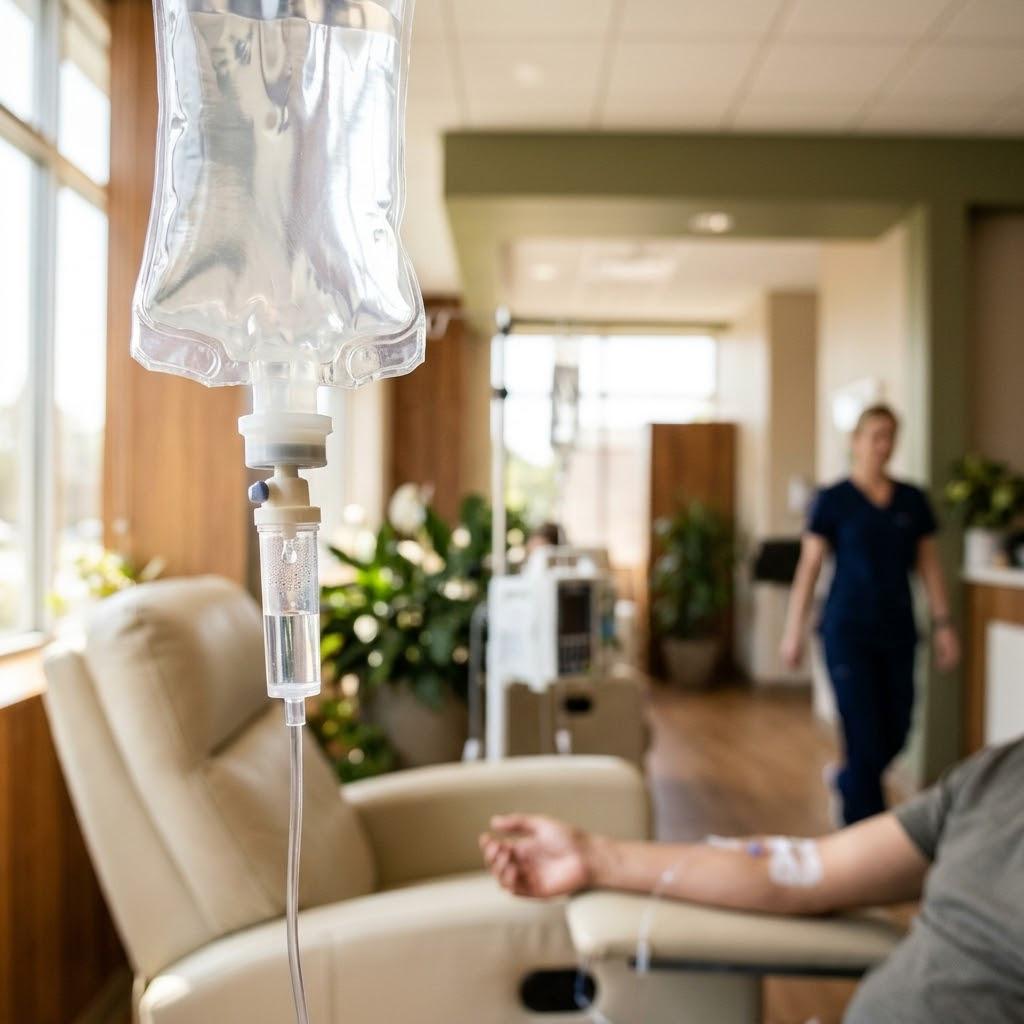
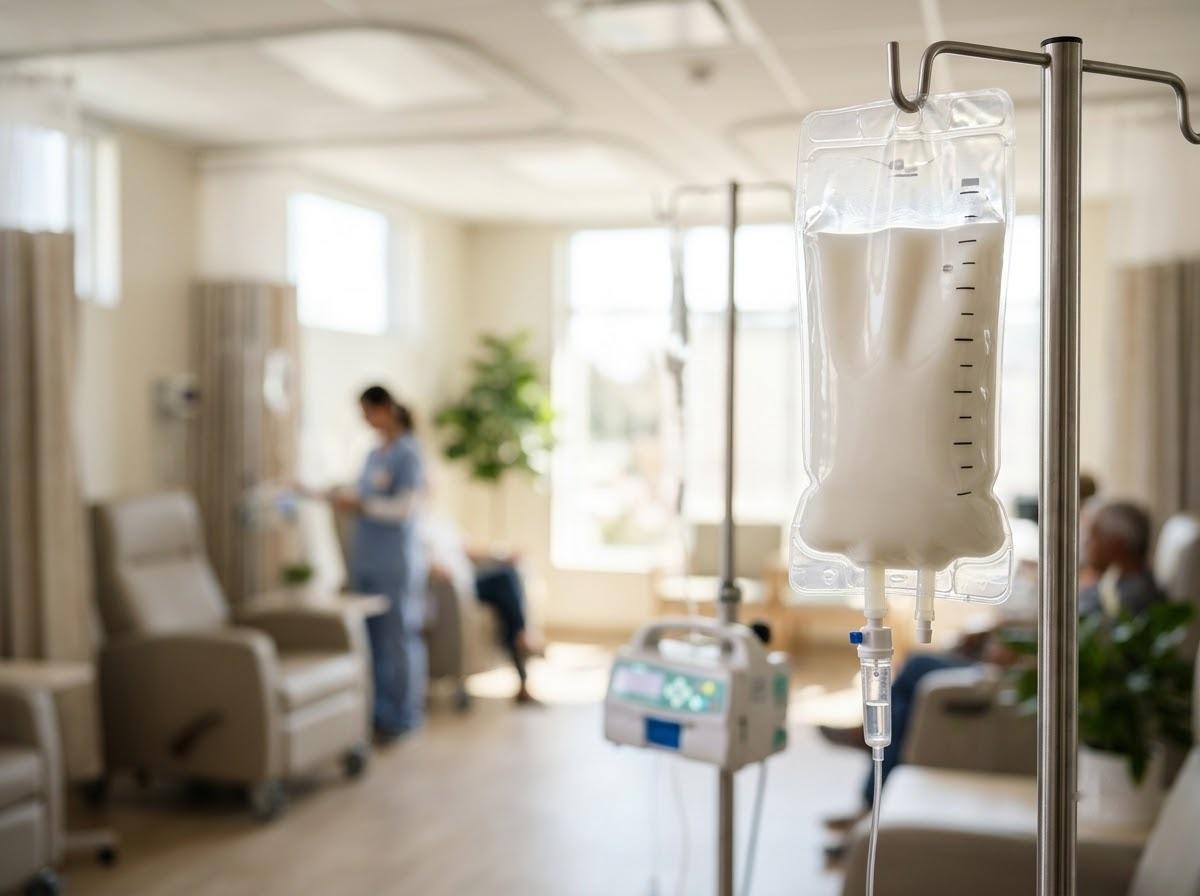
Short-term IV nutrition through a regular IV in the arm, for patients who need extra nutrition while they recover, given by physician order at our Mission Valley clinic with monitoring.
PPN is given by physician order. Call (619) 230-5123 to confirm scheduling and coverage before sending a referral.
- Medicare/Noridian
- Aetna
- Cigna
- United Healthcare
What is PPN (peripheral parenteral nutrition)?
Peripheral parenteral nutrition, or PPN, is IV nutrition given through a regular IV in a vein in your arm to add to what you can eat or absorb for a short time. A pharmacy prepares each bag with sugar (dextrose), protein building blocks (amino acids) and often fats (lipids), along with electrolytes, vitamins and trace minerals. Because small veins are easily irritated, PPN must be more dilute than total parenteral nutrition (TPN), so it usually cannot supply all of your nutritional needs and is typically used for up to about two weeks. It does not require a central line such as a PICC line or port. At Mission Valley Medical Infusion Center in San Diego, PPN is given by physician order, with monitoring during each infusion, regular checks of your IV site and blood tests to check your blood sugar and electrolytes.
Who needs PPN?
PPN is prescribed by a physician when you need extra nutrition for a short time and a central line is not needed. Common reasons include:
- •Eating too little during an illness or after surgery
- •Mild to moderate malnutrition that is expected to improve soon
- •A short period when the gut needs to rest
- •Bridging nutrition while your care team decides on TPN or tube feeding
- •When a central line is not possible or not advisable for a brief course
Is PPN covered by insurance?
Coverage depends on your diagnosis, your plan and where you receive treatment. Mission Valley Medical Infusion Center in San Diego accepts Medicare/Noridian, Aetna, Cigna and United Healthcare. Plans usually ask for documentation of why IV nutrition is needed and may require approval before treatment starts, so your physician's office should send the order and clinical records early. Ask about approval and your estimated out-of-pocket cost before you start. Our team can review what your plan requires when you call (619) 230-5123.
What happens during a PPN visit?
Visit length depends on the volume ordered and how quickly it can safely run through a small vein. Our team can estimate your visit time when you book.
- Step 1Order and blood tests
Your physician sets the formula, volume and schedule. Blood tests check your blood sugar, electrolytes and kidney function before and during treatment.
- Step 2IV placement
A nurse places a regular IV in a vein in your arm and checks the site often. The IV site may be moved to a new vein if it becomes sore.
- Step 3Monitored infusion
The nutrition runs at a controlled rate on an infusion pump while your heart rhythm, oxygen saturation, heart rate, respirations and blood pressure are monitored. Tell the nurse about pain, burning or swelling at the IV site.
- Step 4Ongoing review
Your physician reviews your weight, labs and eating, and decides when to stop PPN or move to food, tube feeding or TPN.
Is PPN safe?
PPN avoids the risks of a central line, but it still needs medical oversight. The most common problem is irritation or inflammation of the vein, called phlebitis, which can cause pain, redness or swelling along the arm, and fluid can leak into the tissue around the IV. Other risks include high or low blood sugar, electrolyte imbalances and fluid overload, because PPN uses a larger volume of fluid than TPN. When nutrition restarts after a long period of poor intake, phosphate, potassium and magnesium can fall quickly, a condition called refeeding syndrome, so blood tests are checked closely at the start. Tell the nurse right away about pain or burning at the IV site. Call 911 for trouble breathing, chest pain, confusion or fainting.
PPN for patients across San Diego County
PPN is usually a short course, so an easy-to-reach clinic helps. Our clinic is at 3530 Camino Del Rio N, Suite 200, in Mission Valley, just off Interstate 8, close to the hospitals, surgeons and gastroenterology practices that care for patients across San Diego County, from Hillcrest and Kearny Mesa to La Mesa and Chula Vista. Referring offices can reach us by email at doc@missionvalleyiv.com or by fax at (619) 228-9877, and we collect blood specimens on site for outside laboratories such as Quest Diagnostics and LabCorp.
Frequently Asked Questions
PPN, or peripheral parenteral nutrition, is dilute enough to run through a regular IV in the arm, so it does not need a central line, but it cannot supply full nutrition and is usually used for a short time. TPN, or total parenteral nutrition, is concentrated, provides all of the calories and nutrients you need and is given through a PICC line or port. At Mission Valley Medical Infusion Center in San Diego, your physician's order specifies which type you receive, the formula and how often.
PPN is meant for short-term support, usually up to about two weeks, because small arm veins become irritated with repeated use and the dilute solution cannot meet full nutritional needs. If you need IV nutrition for longer, your physician may switch you to TPN through a central line or to tube feeding. At Mission Valley Medical Infusion Center in San Diego, your physician reviews your progress, weight and blood tests regularly and decides how long PPN should continue.
No. PPN is given through a regular IV placed in a vein in your arm, which is one of its main advantages when nutrition is only needed for a short time. The IV may be moved to a new vein if the site becomes sore or red. At Mission Valley Medical Infusion Center in San Diego, our nurses place the IV, check the site during each infusion and remove it before you go home unless your physician orders otherwise.
Yes. Blood tests check your blood sugar, electrolytes such as potassium, phosphate and magnesium, and your kidney function, and they are done more often when you first start. Your physician uses the results to adjust your formula. Mission Valley Medical Infusion Center in San Diego collects blood specimens on site for an outside laboratory such as Quest Diagnostics or LabCorp, which charges separately for the tests your physician orders.
Referring offices can email doc@missionvalleyiv.com or fax (619) 228-9877, and a patient referral form is available on our For Providers page. Please include the diagnosis, the PPN order, recent labs and insurance details, because many plans require documentation before approving IV nutrition. Mission Valley Medical Infusion Center in San Diego recommends calling (619) 230-5123 first to confirm scheduling and coverage. Patients can also call us directly and ask their physician to send the order.
Last updated .
Sources: Parenteral Nutrition Overview, Nutrients 2022
This page is general information, not medical advice. Treatment requires a physician evaluation. Coverage depends on your plan and eligibility.
Book a Consult
Contact our clinic today to schedule your consultation. Our experienced medical staff will work with you to outline the best path forward for your health and wellbeing.
Our Location
3530 Camino Del Rio N #200,
San Diego, CA 92108, USA.
Phone
Fax
(619) 228-9877
RN@missionvalleyiv.com
Operating Hours
Mon - Fri: 9:30 AM - 5:30 PM
Sat: 8:00 AM - 1:00 PM (By Appointment)
Sun: Closed
Consultation Hours
Everyday: 9:00 AM - 7:00 PM
Consultation Prices
Internal Medicine
- Initial consult$250
- Follow-up consult$100
Ketamine (IV/IM)
- Initial consult$50
- Follow-up consult$10
- Insurance admin fee$75
Spravato
- ConsultsBased on insurance
All other treatments*
- Initial consult$25
- Follow-up consult$10
*Your physician will decide whether your visit calls for a full comprehensive assessment or a basic medical evaluation.
By filling out this form, you agree to our Terms of Service and Privacy Policy.